The challenge
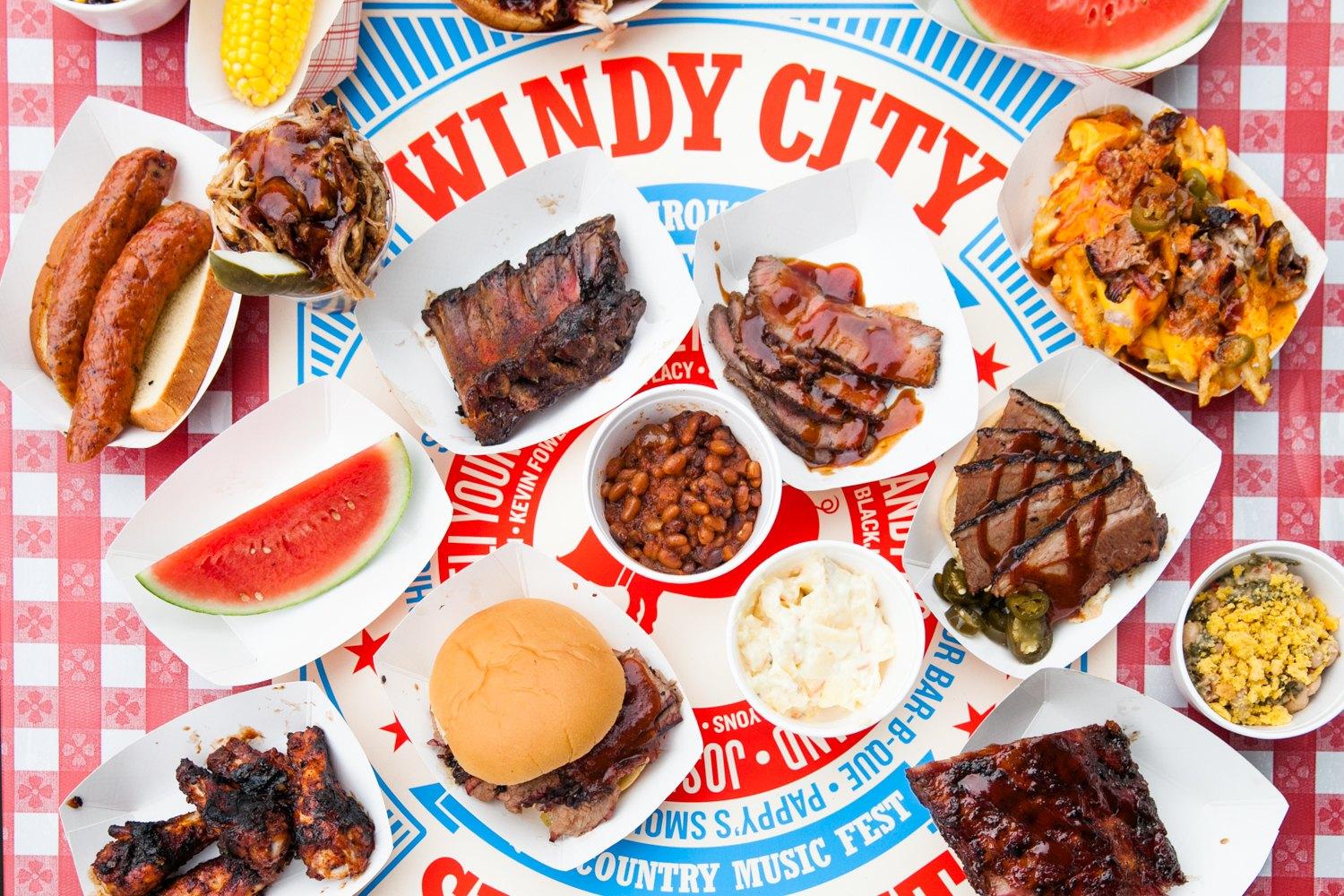
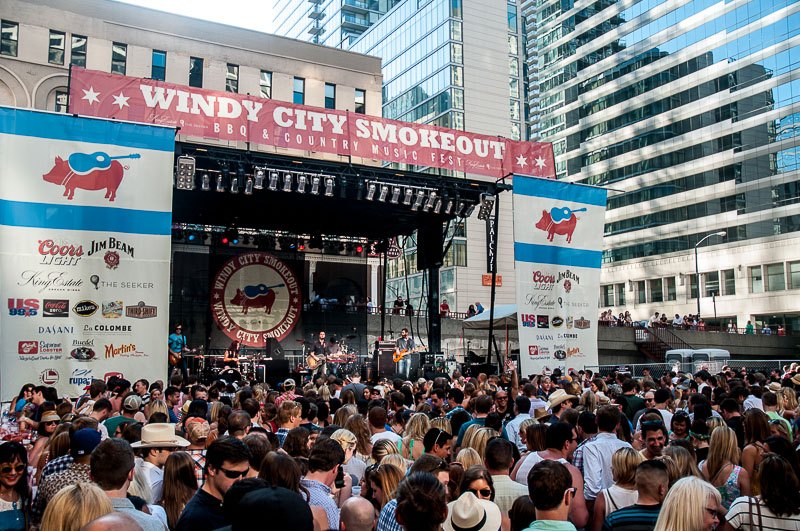
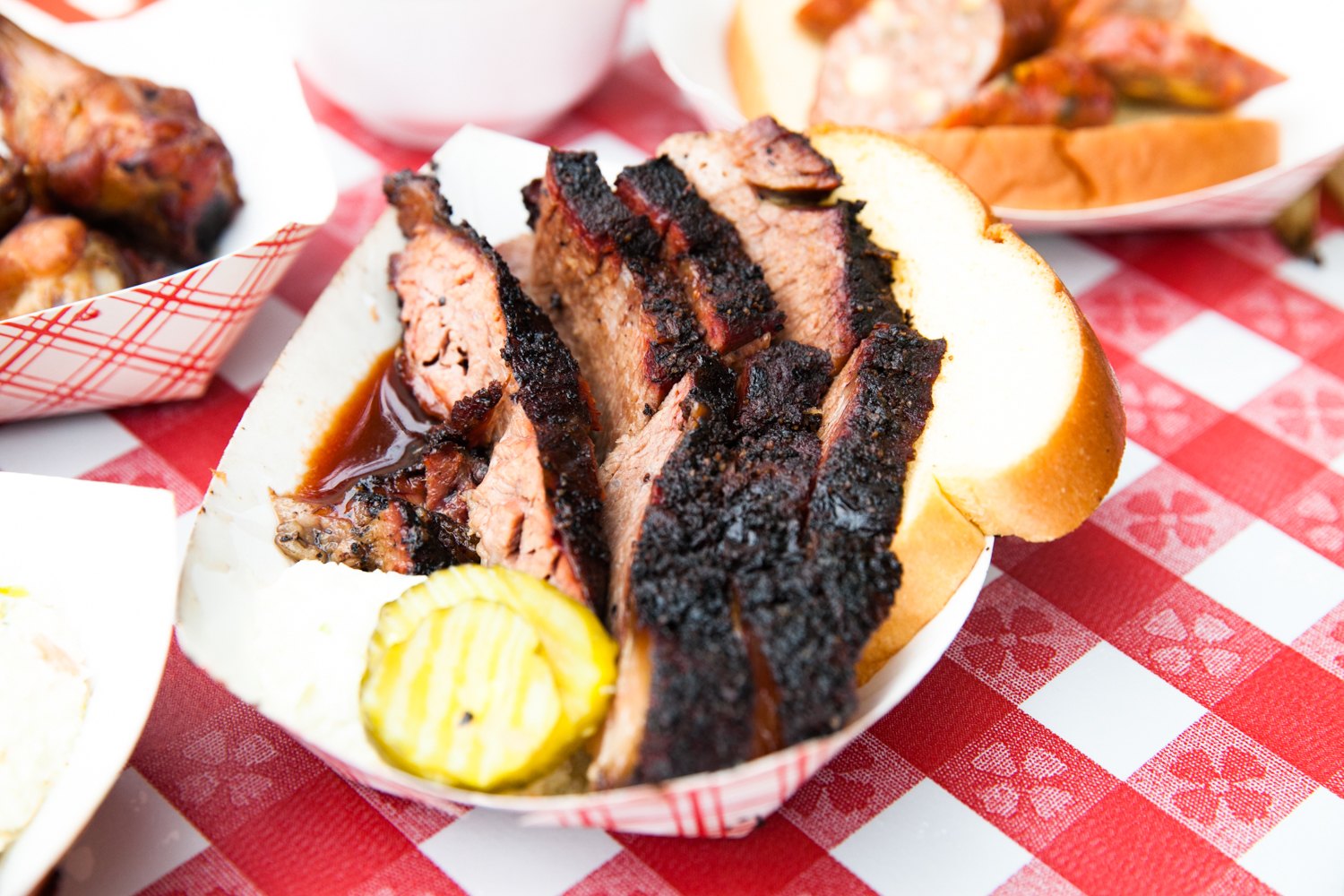
Windy City Smokeout started in 2013 as a new idea from Bub City, Lettuce Entertain You’s barbecue and whiskey bar: pitmasters from across the country and country music, on a downtown street in River North. Chicago already had a packed festival calendar. A new festival had to earn its place every summer and keep fans coming back. In the early years, most people bought tickets at the last minute. Changing our ticketing strategy to get fans committing earlier changed the festival’s trajectory.
The results
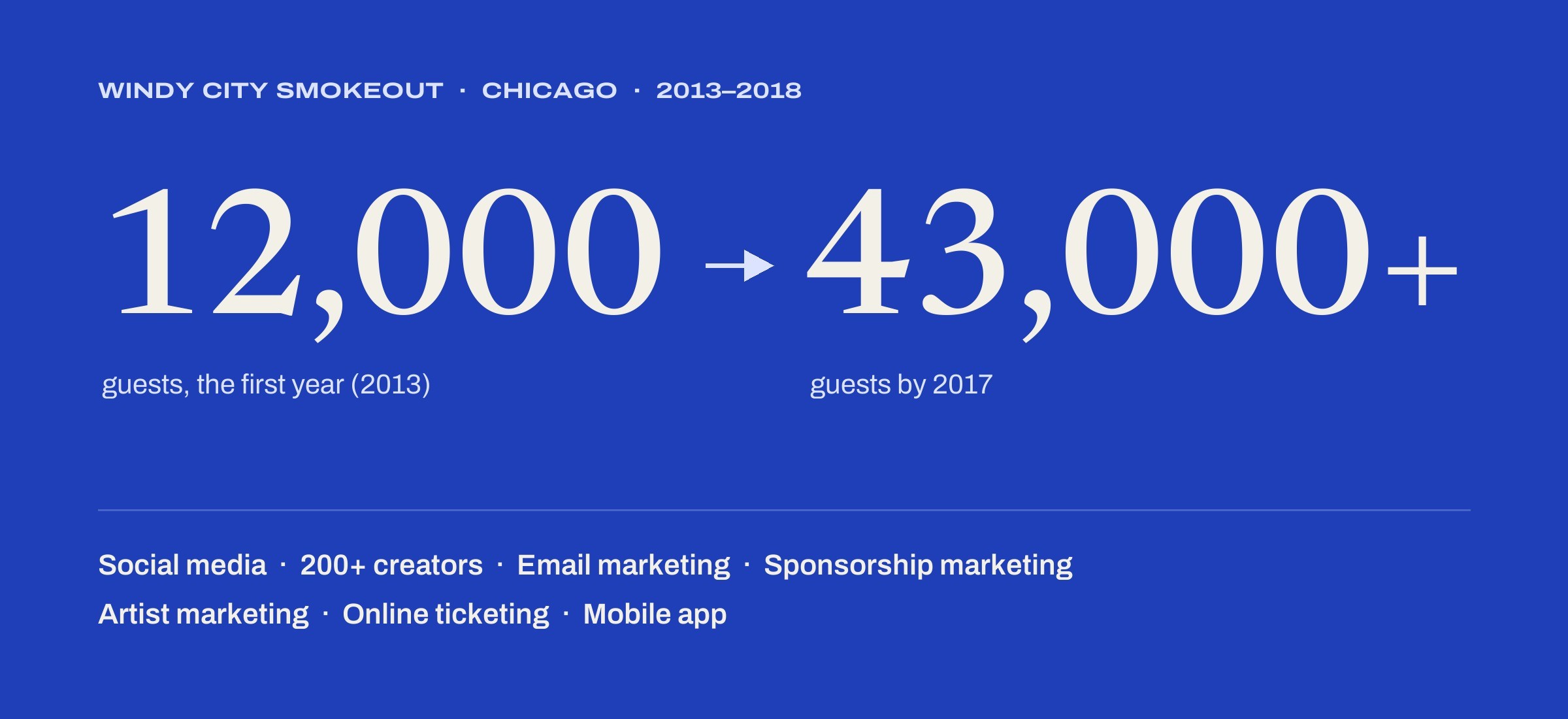
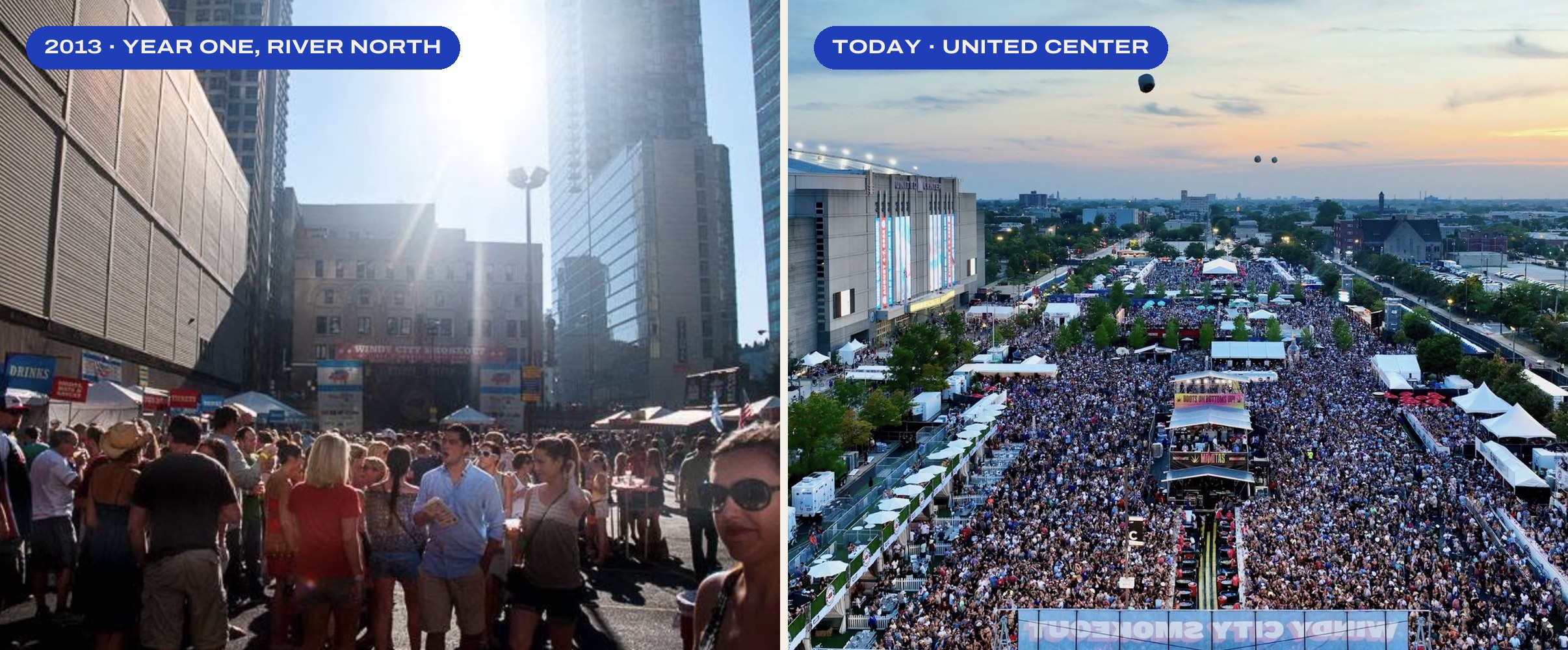
- About 12,000 guests the first year (2013)
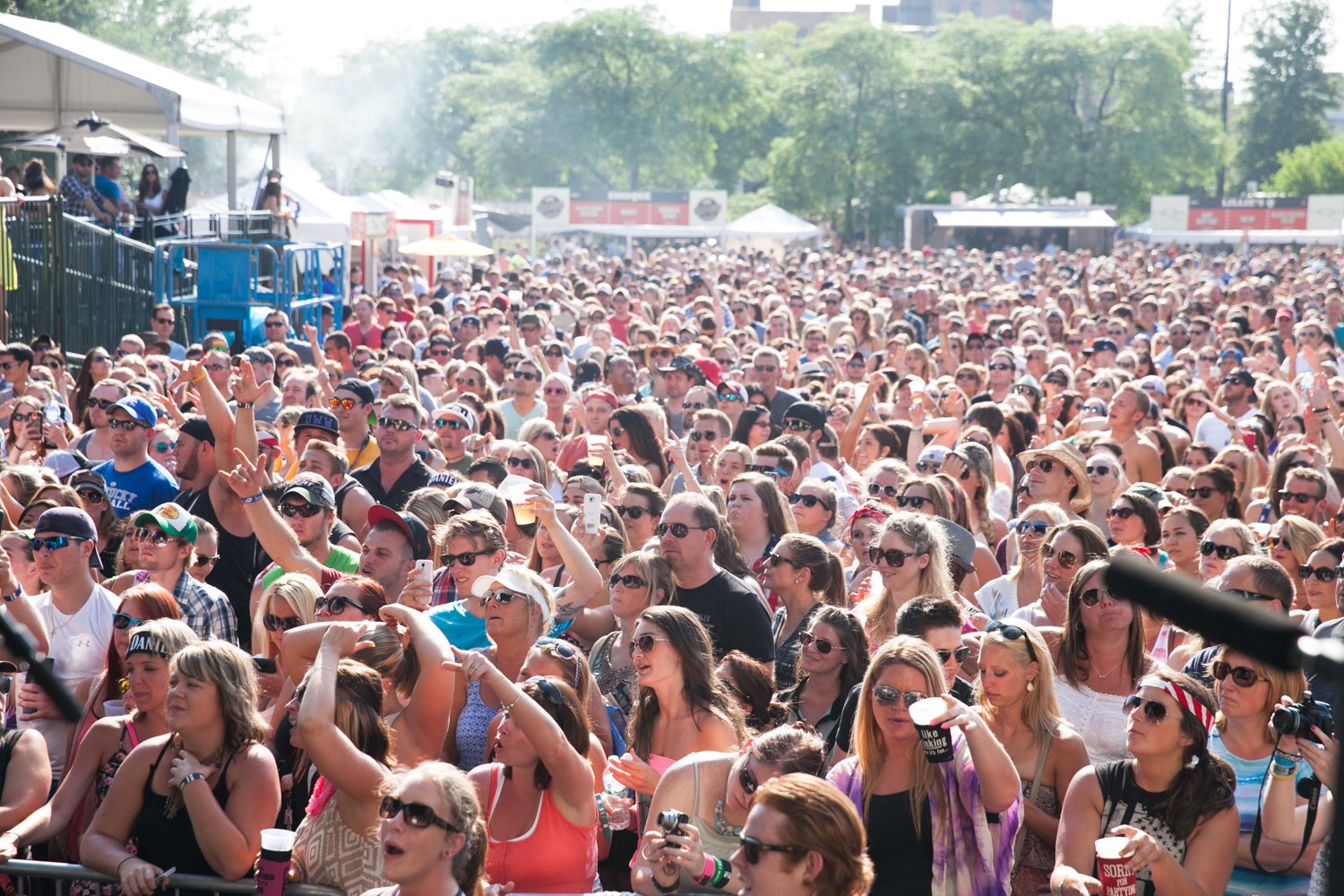
- Nearly 30,000 guests by 2015, with a record Saturday crowd of 12,500
- More than 43,000 guests by 2017, more than three times the first year
- A one-day record of 18,418 fans in 2018, for Brett Eldredge
- Named the Academy of Country Music’s Festival of the Year
My role
I joined on the original social team in year one and took over as head of marketing a few years in, leading it until 2018. I worked alongside the Bub City and Lettuce Entertain You teams, from the pitmasters and operators to our PR agencies, ticketing companies, mobile app developers, sponsors and artists.
What drove the growth
The festival had a lineup of music and barbecue worth the trip, and teams who delivered a great experience year after year. On top of that, these are the marketing levers we pulled:
- Creators: we built a creator program for the festival in its early years and worked with 200+ creators over my time.
- Paid media: we built high-level awareness with paid media across Chicago and beyond, and used retargeting to turn that interest into ticket sales.
- Sponsorship marketing: we grew partnerships with brands like Jack Daniel’s, Budweiser and Moët, brought them to life for fans across the festival, social and email, and ran sweepstakes with sponsors that brought new fans to the festival.
- Artist marketing: we worked with artists and their teams to announce the lineup, promote each set and turn performances into content that sold the next year.
- Social media: we gave fans something to follow and share all year, from lineup announcements and pitmaster reveals to the weekend itself.
- Email marketing: we grew the festival’s email list year over year and rewarded subscribers first, with early ticket drops, exclusive bundles and lineup news before anyone else.
- Online ticketing: we changed the ticketing strategy to drive earlier sales, with planned on-sales, lineup announcements and price tiers from single-day and three-day passes to VIP.
- Referral program: we launched a referral program that gave fans incentives to sell tickets to their friends and family, one of the first in the festival space.
- Cashless: we made the festival fully cashless with RFID wristbands for entry and payments, so lines moved faster and fans spent more time on the barbecue and the music.
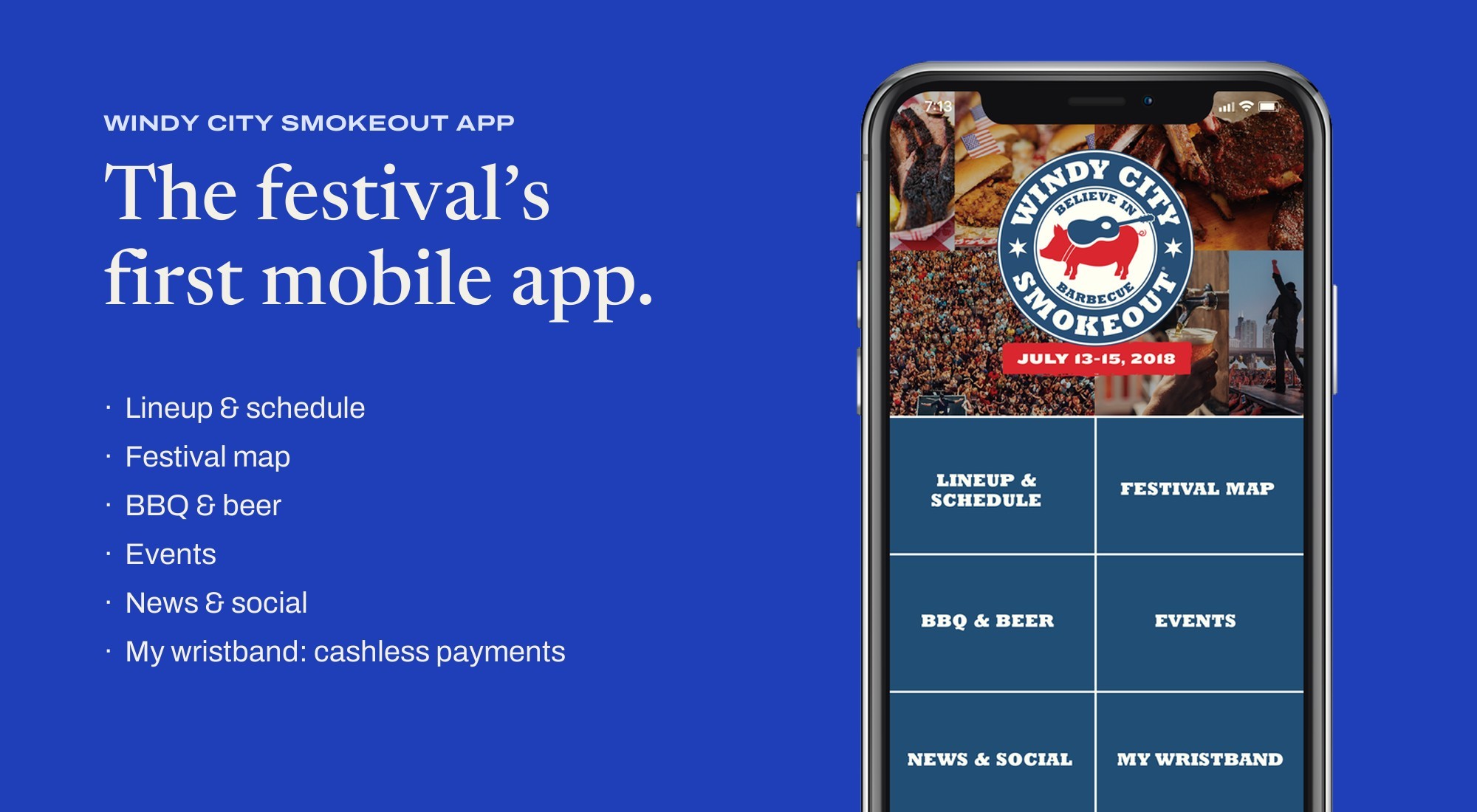
- Mobile app: we launched the festival’s first mobile app, with the lineup and schedule, a festival map, BBQ and beer, news and social, and the cashless wristband in one place.
Together, it was a true 360 campaign, and it led to record ticket sales year after year.
The festival’s first mobile app
We launched the Windy City Smokeout app, available on iPhone and Android, to put the whole festival in one place: the lineup and schedule, a festival map, every pitmaster and brewery, news and social, and the wristband fans used to pay. Paired with cashless RFID wristbands, it made the day easier for fans and gave us a direct line to them before, during and after the festival.
Partners from the world’s best brands
As the festival grew, so did its partners. Over my years, Windy City Smokeout worked with some of the best-known brands in the world, alongside Chicago favorites, and leading marketing, I found ways to bring each one to life for fans:
- Spirits and wine: Jack Daniel’s, Moët & Chandon, Casamigos, Deep Eddy and Appleton Estate
- Beer: Budweiser, Bud Light, Coors Light, Goose Island, Shiner and Boulevard
- Lifestyle and more: YETI, Chevrolet, Red Bull, Sony, Uber, Yelp and La Colombe
- Chicago partners: Abt, US99, Choose Chicago and Chicagoland Speedway, plus the Academy of Country Music Awards
The lineup grew with it
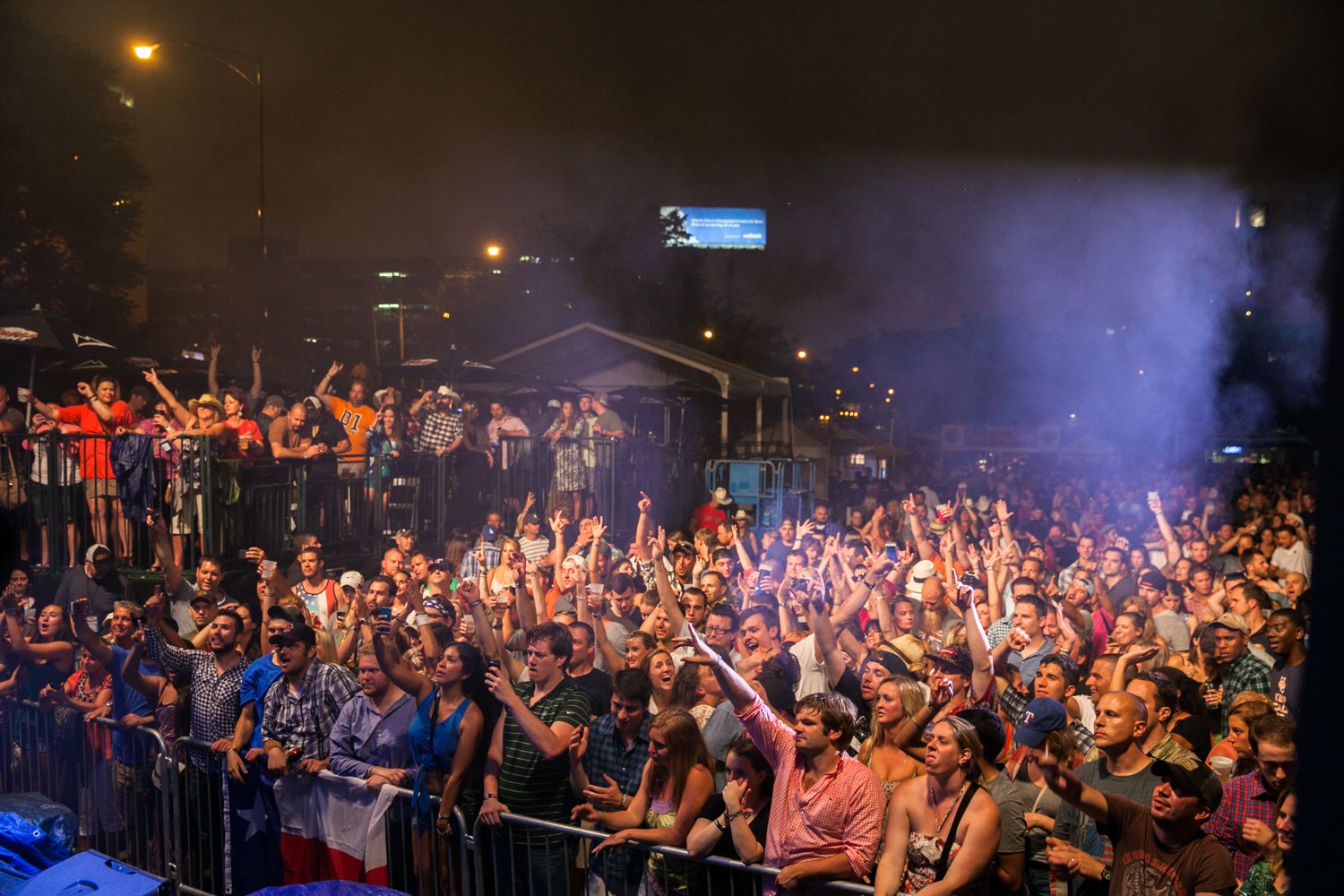
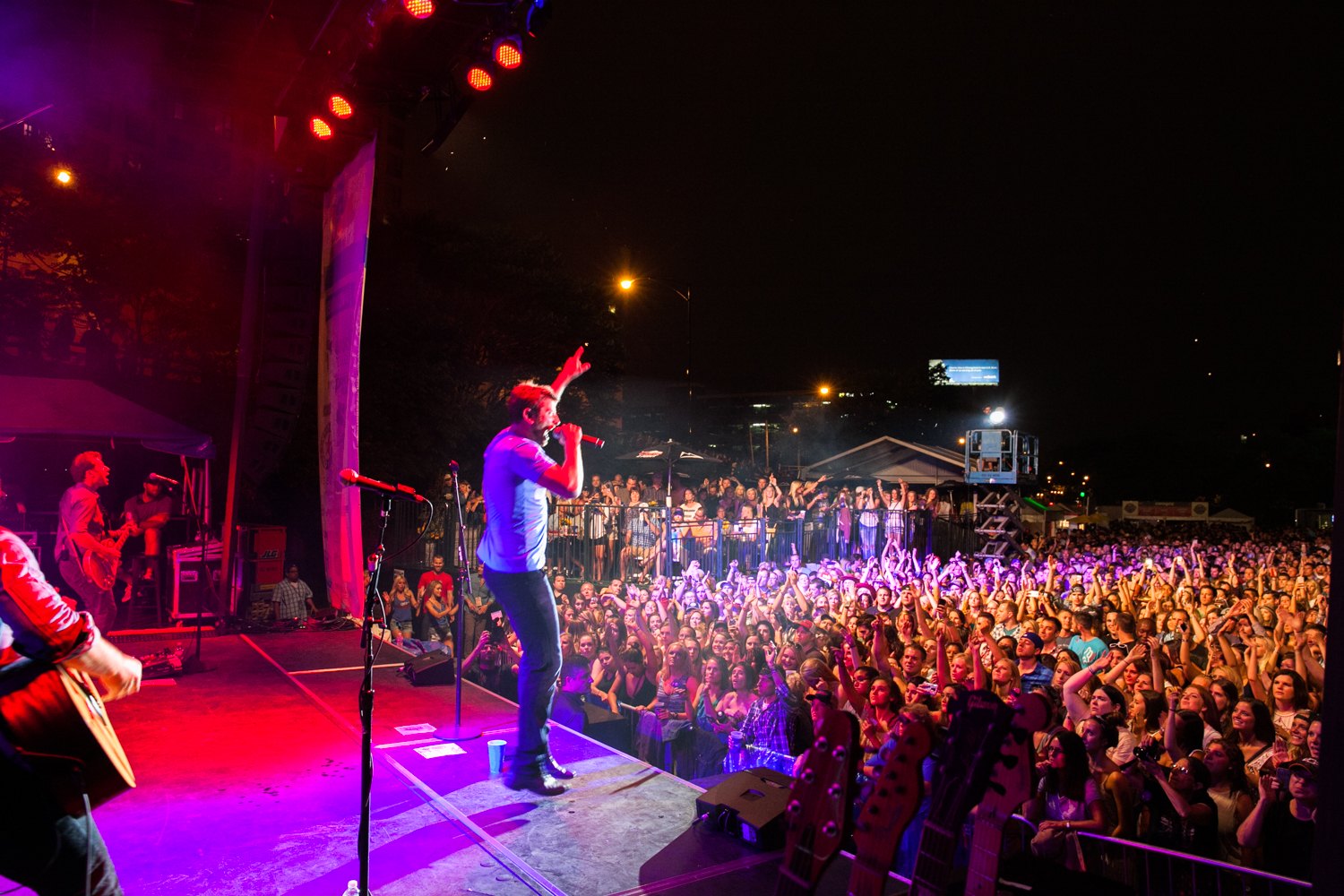
The first year featured Pat Green and David Nail. By 2015, the bill included Chris Young, Kacey Musgraves, Lee Brice, Dan + Shay, Old Dominion and Chris Stapleton, months before his breakout. In 2017, Luke Combs played the festival weeks after releasing his debut album, and in 2018 Brett Eldredge set a one-day record of 18,418 fans.
During my time, the festival was named the Academy of Country Music’s Festival of the Year. It has since moved to the United Center and grown to headliners like Willie Nelson, Miranda Lambert, Tim McGraw, Luke Bryan, Carrie Underwood, Kane Brown, Lainey Wilson and Blake Shelton.
What I’d tell any founder launching an event or festival
- Be obsessed with telling the story and selling the experience. People bought tickets for summer in Chicago, barbecue and friends before they knew every artist.
- Your ticketing strategy is everything. Get the messaging and pricing right, and use data to keep optimizing them. Create real urgency and drive sales early, and your earliest buyers become an army of ambassadors.
- Design brand moments throughout the event that people want to share. We were building them before that was a thing. Every guest who posts becomes a promoter and helps sell next year.
- Activate your talent. Artists and pitmasters have thousands to millions of followers, so make sure they’re posting and promoting.
- Build your list and your brand from day one. Every year’s fans are next year’s first ticket buyers.
- Bring creators and press in early and give them a unique experience. Their content from this year sells next year’s tickets.
- Use technology to remove friction. Cashless payments and an app made the day better, and gave us more data on our customers to plan the next one.
Today I bring that experience to founders through Dialed, from restaurant and hotel openings to events and festivals.
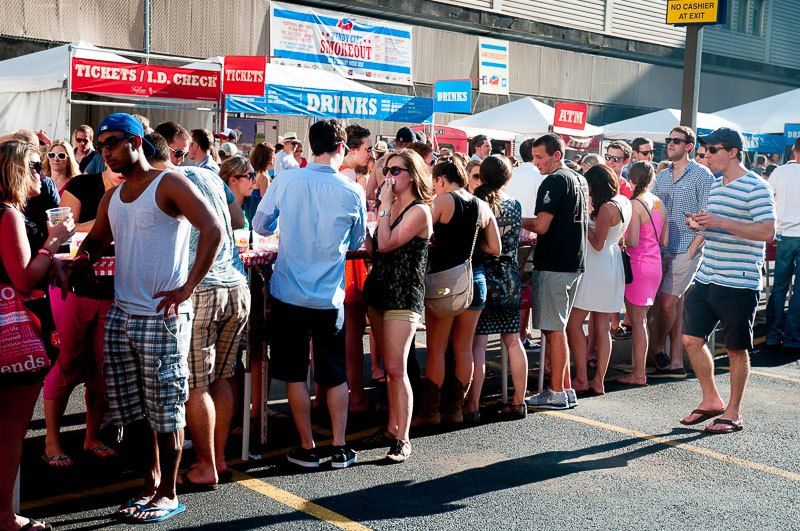
A team effort at Lettuce Entertain You and Bub City. Photos from the festival’s official 2013 and 2014 galleries and the festival today, shown as portfolio work. Sponsors from the festival’s 2014, 2015 and 2017 sponsor pages; attendance from public press coverage.